
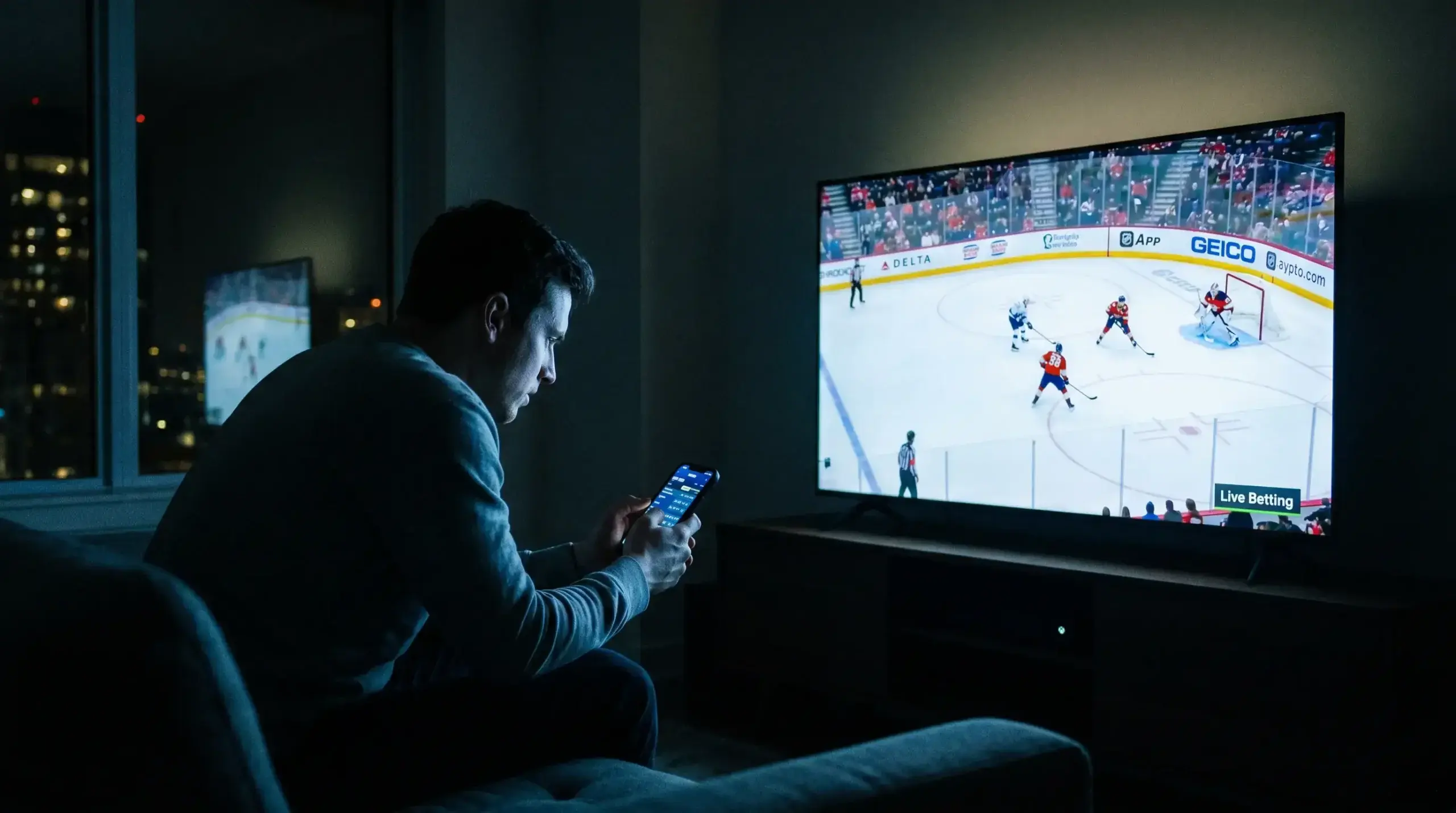

The goal that moved the price before the replay finished
The thing that hooked me on in-play hockey betting was watching a price collapse in real time. A goal went in, and before the celebration on the ice had even ended, the moneyline had swung hard, the total had jumped, and a market that had been settled all evening was suddenly alive. Remote betting generated 599.05 million pounds in gross gambling yield in a single quarter, and a growing share of that is live, in-play money chasing exactly those moments. The speed is the appeal and the danger in equal measure.
Live betting, or in-play betting, means placing bets while the game is happening, on prices that update continuously as the action unfolds. It rewards the bettor who can read a game faster and more clearly than the market, and it punishes the one who simply reacts to the last thing that happened.
How in-play odds actually move
The first lesson of live betting is that the price chases the scoreboard, often too eagerly. Every goal, every penalty, every shift in momentum sends the in-play prices moving, and the most violent swings come from goals because hockey is low-scoring enough that a single goal reshapes the whole game state. A 1.90 favourite that concedes first can drift to 3.00 in seconds, and the question is always whether that new price overreacts.
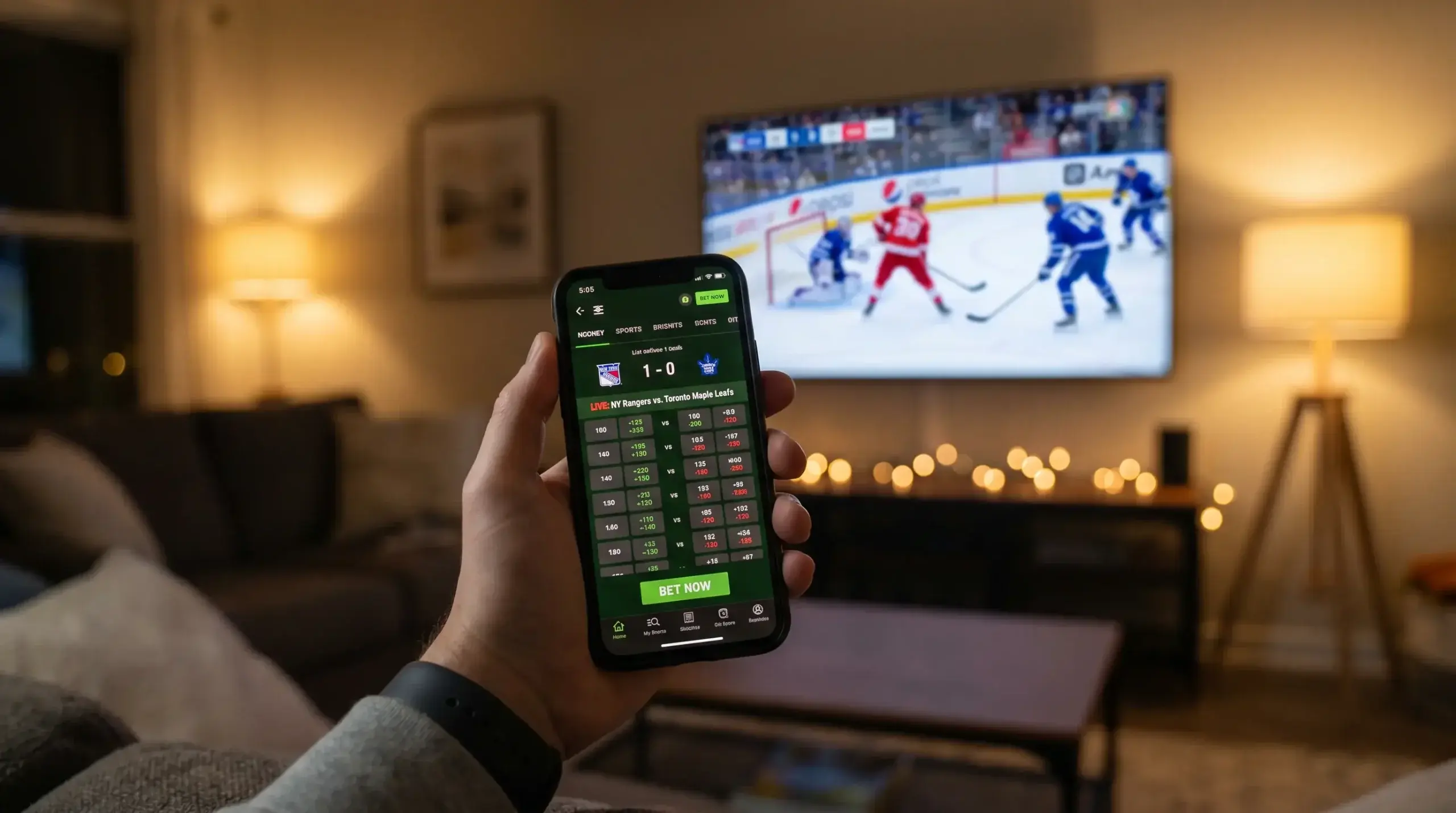
This is where the structural features of the sport become live-betting weapons. Empty-net goals turn up in roughly twenty to twenty-five percent of games, scored in the final minute when a trailing team pulls its goalie, and the in-play market knows this is coming. When a one-goal game enters its final two minutes, the prices on the leading team and on the over both stiffen in anticipation of the goalie pull. A bettor who understands that the empty-net goal is likely, not random, can position ahead of the move rather than chasing it after the puck is already in the net.
The pattern I watch hardest is the overreaction to an early goal. A goal in the first period reshapes the price far more than it reshapes the actual game, because there is a full sixty minutes for the deficit to be overturned. The market often shortens the new leader too far, and the value sits on backing the side that just conceded, at a price inflated by the recency of the goal rather than the reality of the contest.
Reading momentum without being fooled by it
Momentum in hockey is real but treacherous, and the live market trades on it constantly. A team that has just killed a penalty, won a string of faceoffs and is hemming the opponent in their own zone feels unstoppable, and the price reflects that feeling. The discipline is separating genuine, sustained territorial control from the kind of brief surge that evaporates the moment play resets.
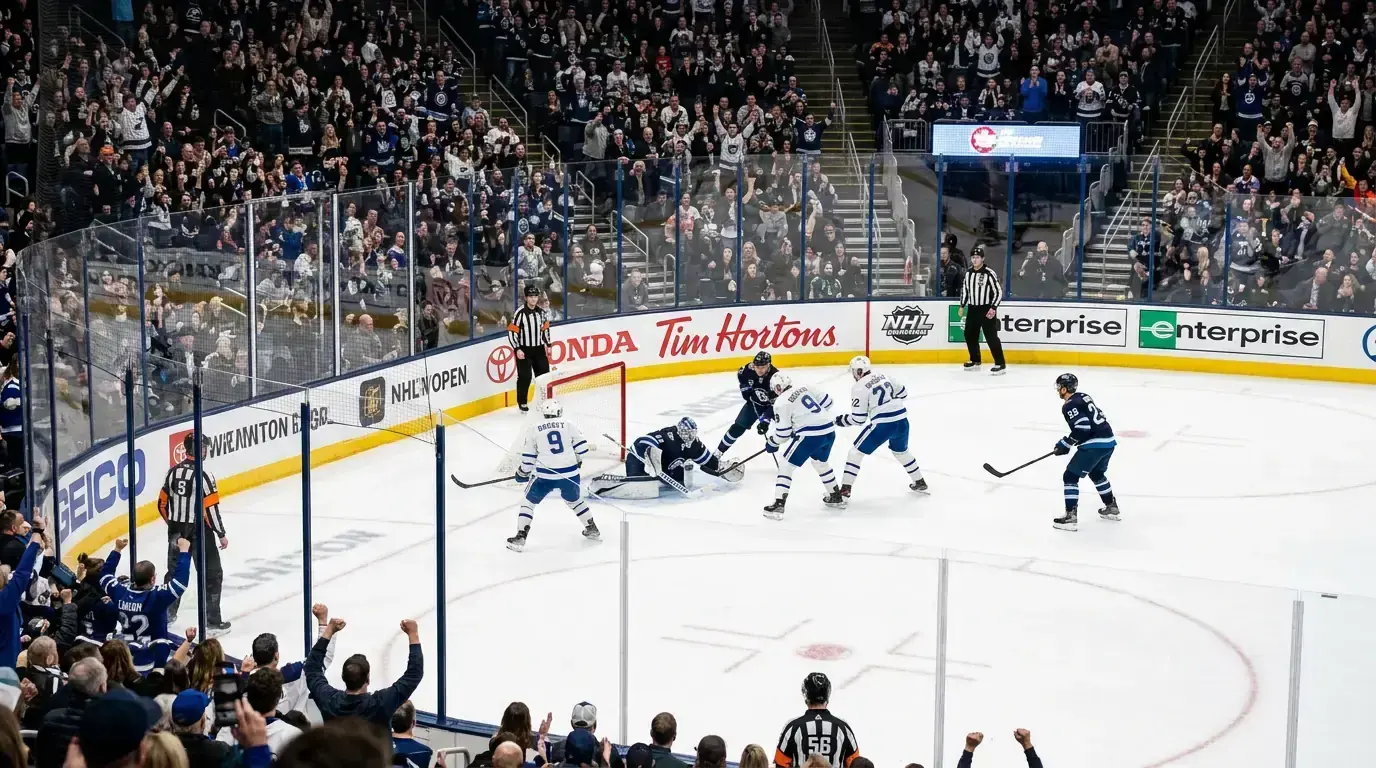
What I have learned to trust is the underlying flow rather than the highlight. Sustained shot dominance, repeated zone time and a goalie under constant pressure are signals that a goal is genuinely coming, and they often arrive before the price has fully adjusted. A single dangerous chance or a lucky bounce, by contrast, moves the price without changing the true state of the game, and that gap between perceived and actual momentum is the live bettor’s edge. NHL commissioner Gary Bettman has put his faith in the underlying soundness of the sport, saying, “I really have confidence in our game, the integrity of our game, and the integrity that our players and all of our personnel bring to the game.” For a live bettor the practical version of that confidence is trusting the on-ice fundamentals over the emotional swing of the moment.
The trap is letting the broadcast narrate your bet. Commentary amplifies momentum because drama is its job, and a bettor who follows the commentary into a price is usually buying the swing at its peak. I keep my own read of the shot clock and the territorial play, and I bet against the narrative far more often than I bet with it.
The discipline of cashing out
Cash out is the feature that makes live betting feel safe and quietly costs people the most. It lets you settle a bet before the game ends, locking in a profit or limiting a loss at a price the operator offers in the moment. The appeal is obvious: a bet that is winning can be banked before it can go wrong. The cost is that the cash-out price is shaded in the operator’s favour, just as the original odds were.
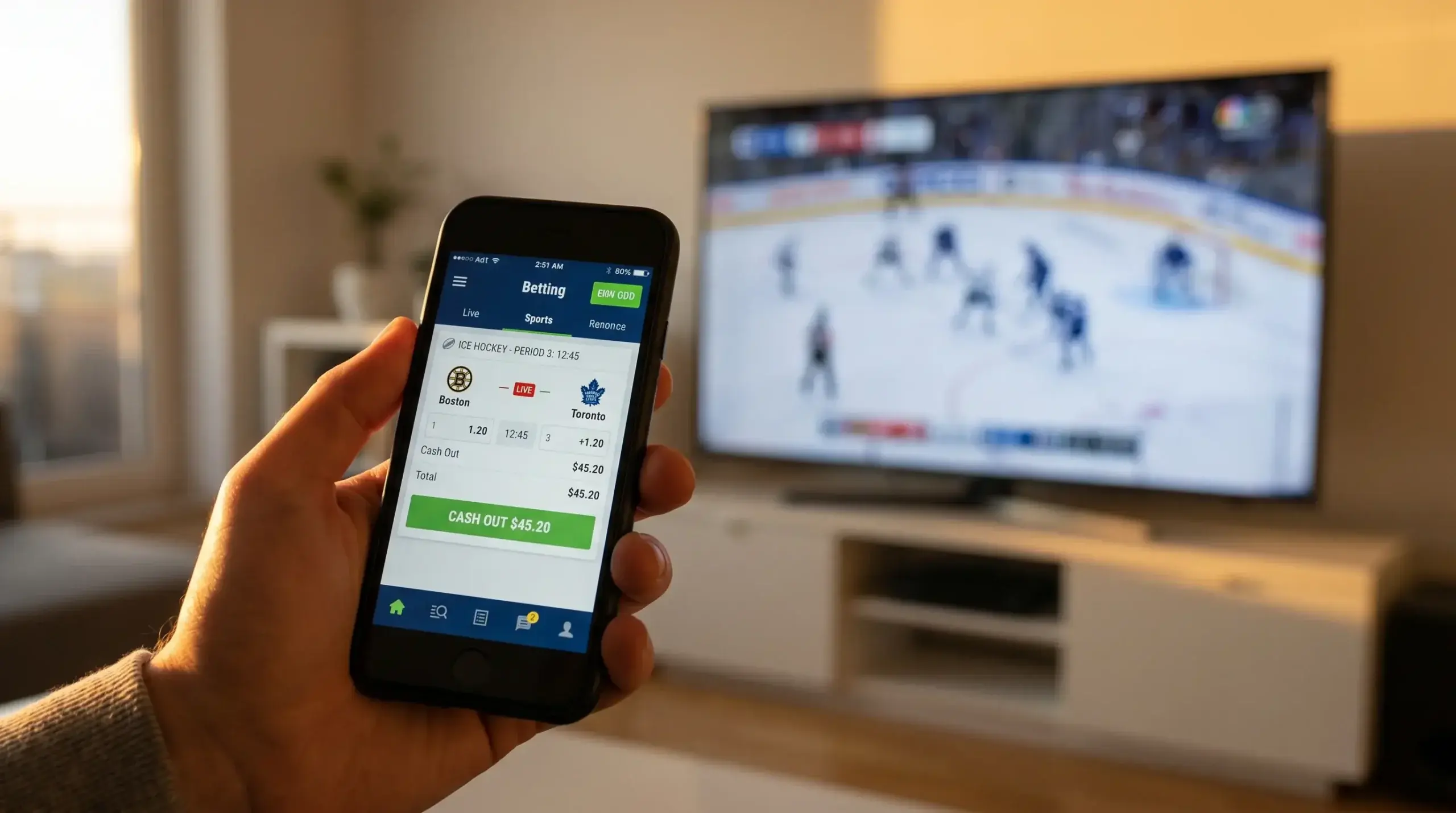
I treat cash out as a tool for managing genuine uncertainty, not for soothing nerves. If the game state has changed in a way my original bet did not anticipate, an injury, a goalie pulled early, a red-hot run against my side, taking the cash-out value can be a sound decision. But cashing out a sound bet simply because watching it is stressful is paying a premium to avoid discomfort, and over time that premium adds up to real money handed back. The cash-out button is designed to be tempting precisely because the operator profits when you use it impulsively.
My rule is to decide why I would cash out before the game starts, so the in-the-moment temptation meets a plan rather than raw emotion. For the deeper mechanics of how the handicap behaves as a game unfolds, which feeds directly into reading in-play prices, see my full puck line guide.
Trading the game, not chasing it
The mindset that separates winning live bettors from losing ones is the difference between trading and chasing. Chasing means reacting to whatever just happened, buying the leader after every goal and cashing out at the first wobble. Trading means holding a read on the game’s true state, positioning ahead of predictable moves like the empty-net push, and betting against the market’s overreactions rather than with them. The prices move in seconds, but the bettor who has done the thinking in advance is calm while the screen flickers, and calm is where the edge lives.