
The morning I realised there was hockey to bet before lunch
For years I treated the NHL as the only ice hockey worth a stake, until a quiet Sunday when there were no North American games and I stumbled onto a full slate of European fixtures kicking off in the early afternoon UK time. The Kontinental Hockey League and the Swedish Hockey League had been there the whole while, priced and ready, and I had been ignoring them. In a single quarter, the UK industry generated 4.5 billion pounds in gross gambling yield, and a slice of that flows through markets most British bettors never look at. That blind spot was costing me, and closing it widened my week considerably.

The KHL is the major league spanning Russia and neighbouring countries, while the SHL is Sweden’s top flight, widely regarded as the strongest league in Europe. Both are bettable from the UK through licensed operators, and both reward the bettor willing to learn a rhythm that is not the NHL’s.
Getting to grips with the KHL market
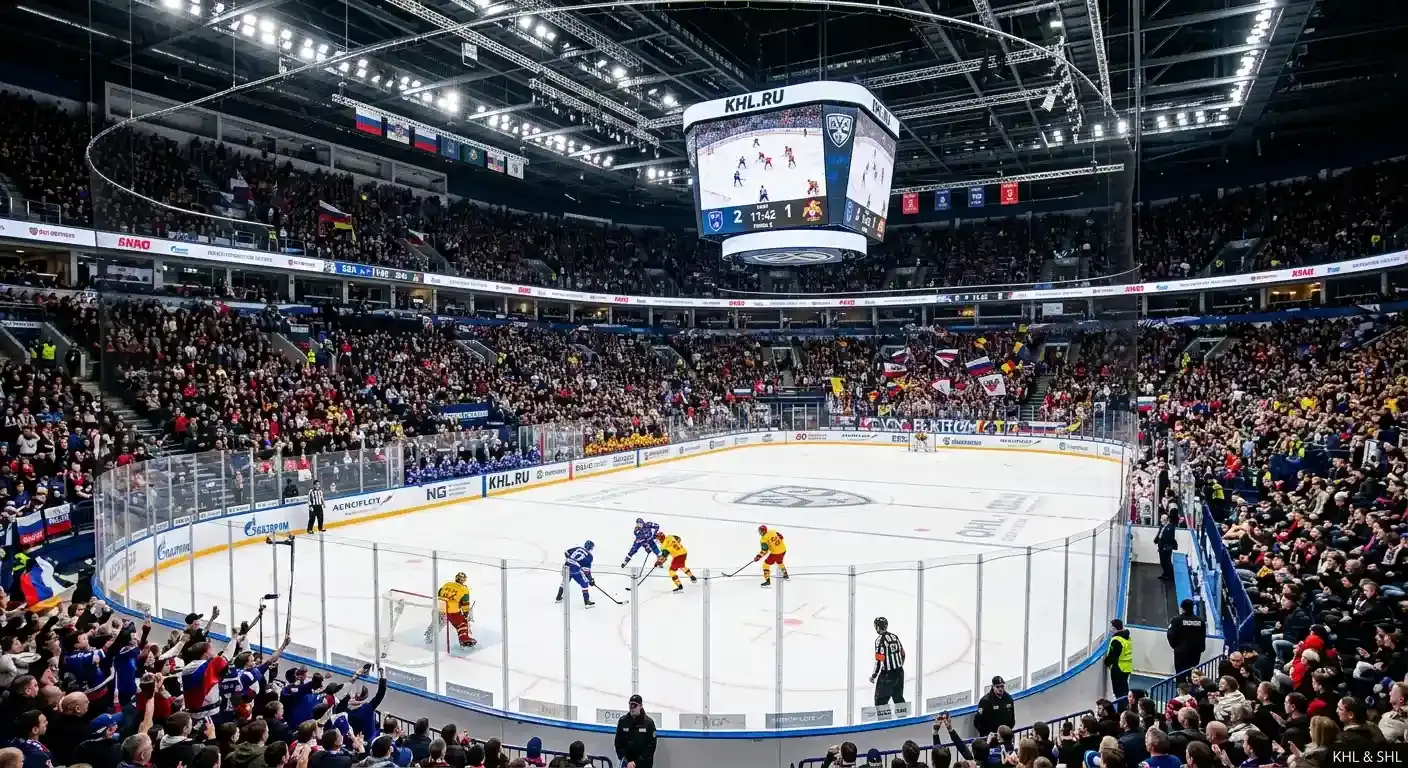
The first thing to understand about the KHL is that it is big, sprawling and stylistically distinct. The games are played on larger ice surfaces than the NHL, which opens up the play, rewards skating and passing over physical forechecking, and tends to produce a different scoring pattern. The puck line works the same way it does everywhere, a fixed handicap of plus or minus 1.5 goals, but the wider ice and the emphasis on skill mean the flow of a KHL game can feel looser than the tight, structured NHL contests British bettors know best.

Market depth on the KHL varies sharply by operator. The headline games, the big clubs and the marquee fixtures, get a full set of markets: moneyline, handicap, totals and outrights. The smaller fixtures can be thin, sometimes a bare moneyline and nothing else, because the league is a niche within a niche for UK operators. That patchiness is both a frustration and an opportunity, since neglected lines move slowly and a bettor who follows the league closely sometimes knows more than a stale price does.
What I will not do is pretend to read a KHL game the way I read an NHL one. The information is harder to come by from a British armchair, team news is less reliably reported in English, and the travel across enormous distances affects sides in ways I cannot always track. I bet the KHL more conservatively as a result, leaning on the moneyline and the total rather than the handicap, and only when I have a genuine read rather than a guess.
Why the SHL deserves more respect than it gets
If the KHL is about scale, the SHL is about quality. Swedish hockey is tightly contested, well-organised and produces a steady stream of NHL talent, and the league’s competitiveness shows up in the prices: favourites are rarely as short as the NHL’s biggest names, because the gap between the best and the rest is narrower. That tighter distribution makes the SHL a thinking bettor’s league, where edges come from knowing the teams rather than backing the obvious.

The SHL is also where the value of understanding decimal odds really pays off, because a decimal price shows the total return on a one-unit stake and lets you compare a Swedish favourite directly against an NHL or EIHL one on the same scale. A 1.90 favourite in the SHL implies a fifty-three percent chance, and in a league this even, that is often a genuine coin flip dressed up as a favourite. Reading the prices on a common decimal scale stops you assuming a “favourite” is anything of the sort.
Coverage of the SHL among UK operators is, if anything, slightly better than the KHL on the strongest games, because the league’s reputation pulls in interest. The totals market in particular rewards study, since Swedish hockey’s structured, defensively sound style keeps scores down, and the line frequently sits below the NHL’s typical 5.5 to 6.5 range. A bettor who learns that lower baseline can find value on unders that look short to someone anchored to North American numbers.
Lining the European leagues up against home
Set the KHL and SHL beside the leagues British bettors know and the contrasts sharpen. The NHL is the deepest, most heavily traded market, with prices that move fast and margins shaved tight by competition. The EIHL, Britain’s own top flight, drew over 1.3 million spectators across its 2025-26 season and is growing, but its betting markets remain niche and patchy. The European leagues sit somewhere between: more bettable than the EIHL on their big games, less liquid and slower-moving than the NHL.

The practical consequence is that I treat each league as a separate discipline. NHL betting is about beating a sharp, fast market on the margins. EIHL betting is about knowing a small league intimately. KHL and SHL betting is about exploiting the gaps in coverage and the slower prices, while accepting that my information edge is thinner than it is at home. The puck line, the moneyline and the total mean the same things across all of them, but the texture of each market is different, and pretending otherwise loses money. For how the deepest of these markets actually works in practice, I cover the North American side in my NHL odds guide for UK bettors.
Building European hockey into a betting week
The reason I now bet the KHL and SHL is simple time zones. European games fill the afternoon and early evening UK slots that the NHL leaves empty, giving a British bettor live action to read at sociable hours rather than the small hours of the morning. That alone makes them worth learning. Bet them with respect for their differences, lean on the markets where your read is genuine, and treat the coverage gaps as the edge they are, and the European leagues become a real extension of the betting week rather than an afterthought.