

The one formula I wish someone had drilled into me sooner
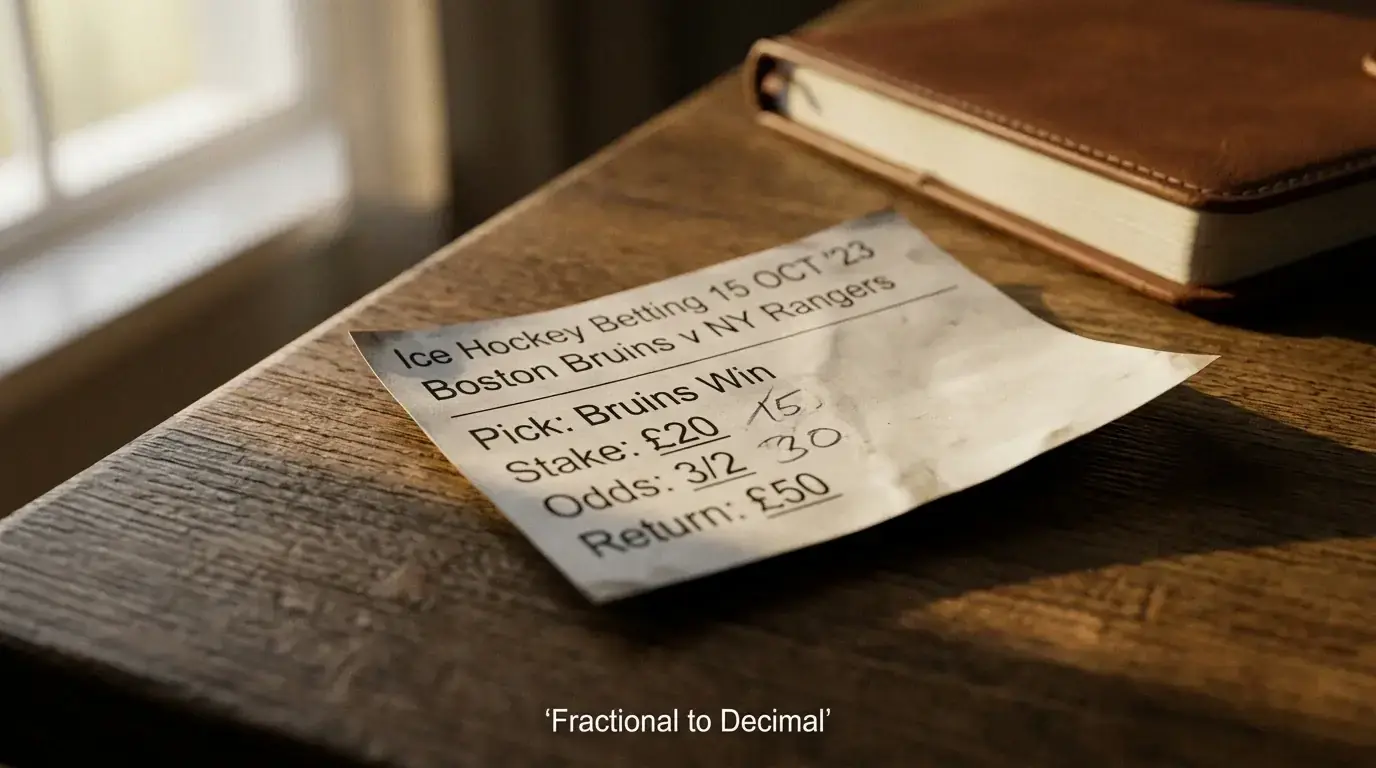
The first time I tried to compare a price across two UK bookmakers, one had it as 5/2 and the other as 3.40, and I genuinely could not tell you which was better without a pen and the back of a betting slip. That was nine years ago, and it cost me about twenty minutes of squinting before puck drop. The fix turned out to be embarrassingly small: a single piece of arithmetic that turns any fraction into a decimal in about three seconds.
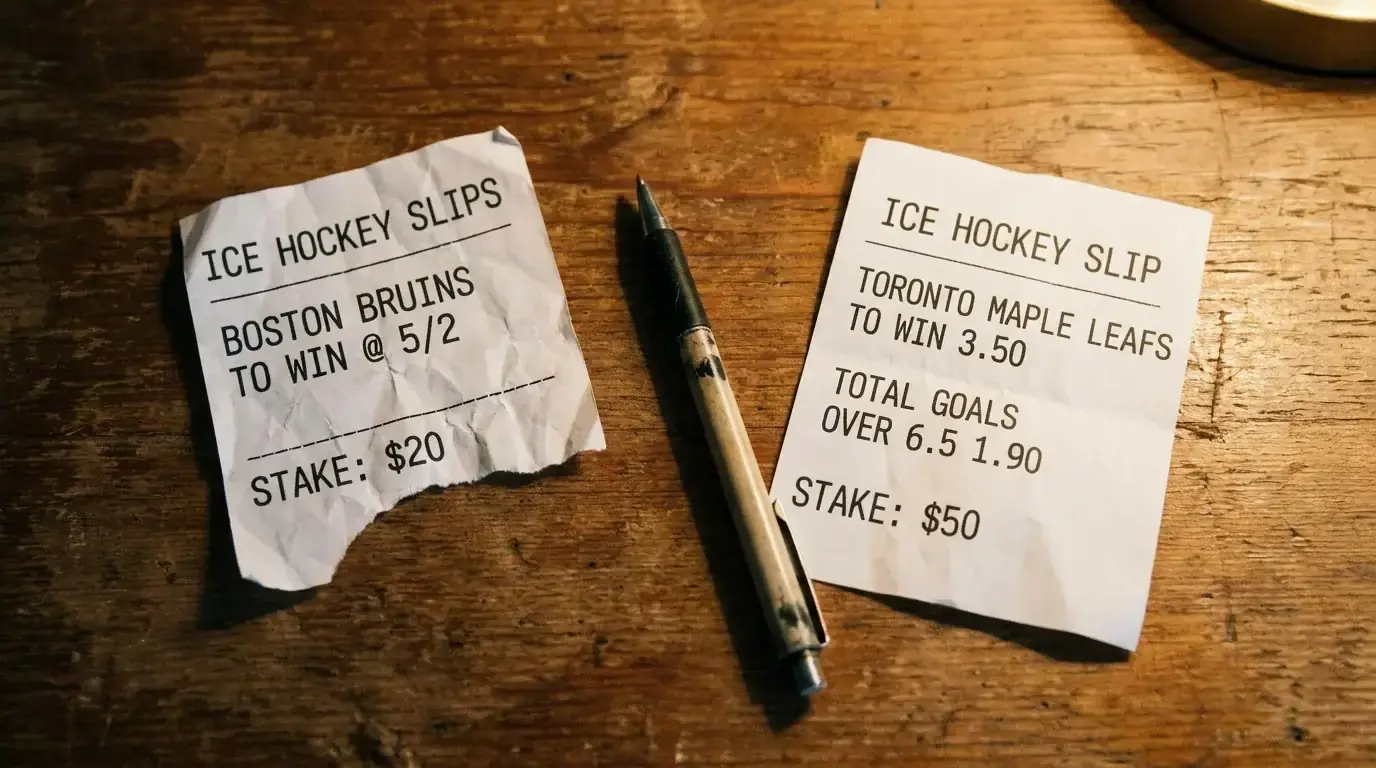
Here it is, the whole thing. Take a fractional price written as a/b, divide a by b, then add one. That plus one is the part everyone forgets, and it is the part that matters most. Decimal odds describe the total return on a one-unit stake, profit and stake together, which is why decimal is the format that quietly trips up newcomers into thinking they have won more than they have. A fractional price, by contrast, only ever tells you the profit. The “add one” is the bridge between those two ideas: it folds your returned stake into the number so the decimal can show the full payout at a glance.
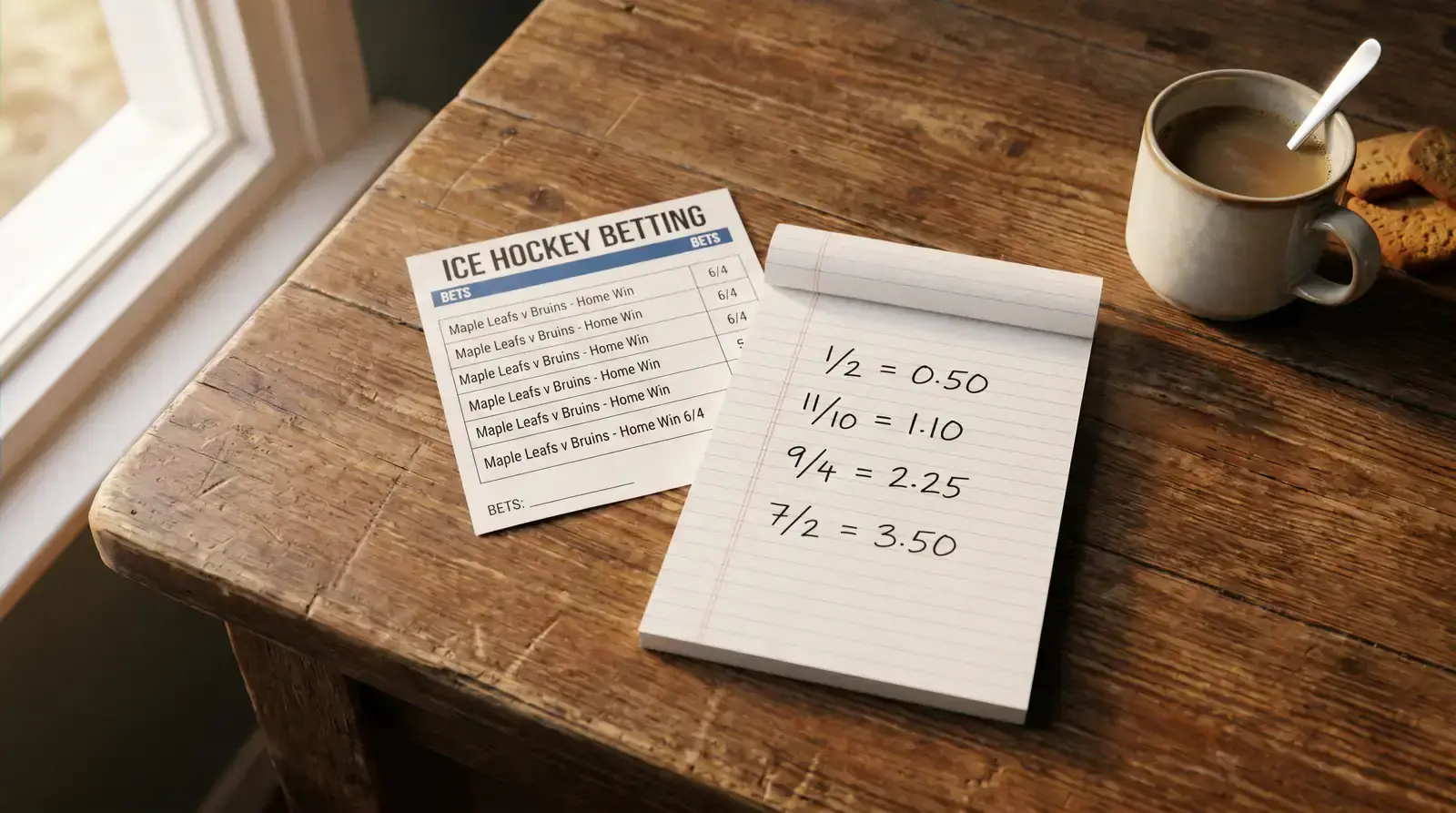
So 5/1 becomes 5 divided by 1, which is 5, plus one, which is 6.00. A one pound stake at 5/1 returns six pounds in total, five of that being profit. That is not a coincidence or a rounding quirk; it is the formula working exactly as designed. Once you have seen it land cleanly on a price you already understand, you start trusting it on prices you do not.
Where the formula earns its keep
Let me run the awkward ones, because the clean examples never test anything. The fractions that catch people out are the ones with ugly numerators, and ice hockey markets are full of them once you get away from the headline favourites.
Start with 5/2, the price I fumbled all those years ago. Five divided by two is 2.5, plus one is 3.50. A ten pound stake returns thirty-five pounds, twenty-five of it profit. Now 11/4, which looks scarier and is not: eleven divided by four is 2.75, plus one is 3.75. And 9/5, a common mid-table moneyline price, comes out at 1.8 plus one, so 2.80.
The odds-on prices are the ones worth slowing down for, because this is where the difference between profit and total return does real damage to your expectations. A favourite at 5/6 is odds-on, meaning a successful six pound stake returns eleven pounds, five of that being profit and six being your own money handed back. Run the formula and you get five divided by six, which is 0.833, plus one, landing on 1.83. That decimal sitting just below two is the bookmaker telling you, in a single number, that you are risking more than you stand to win. Decimal is the format that makes this honest. A novice reading 5/6 might feel like they are getting some sort of deal; the same novice reading 1.83 understands instantly that the stake outweighs the reward.
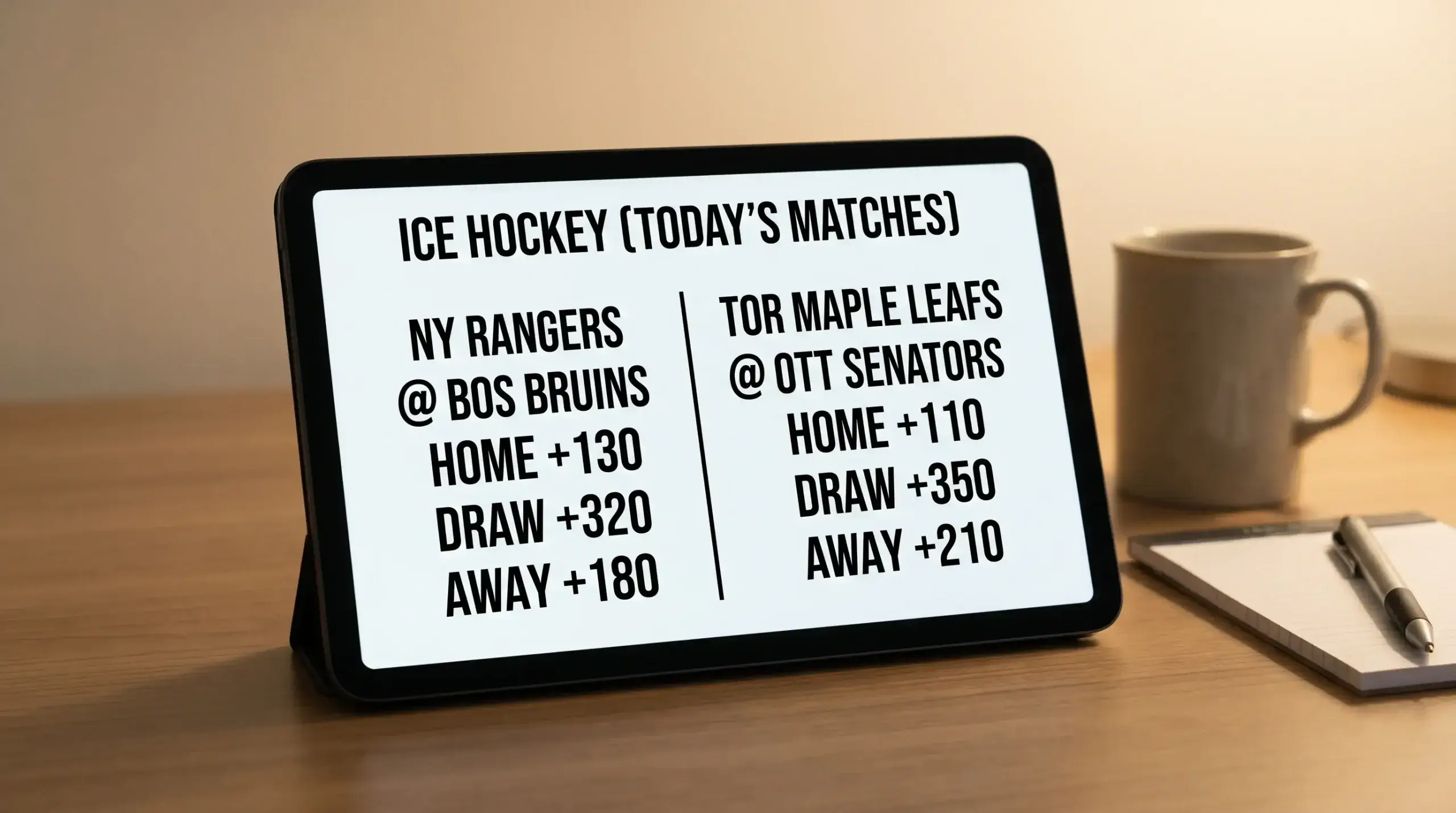
I lean on decimal precisely for this reason. When I am comparing an EIHL home favourite priced around 1.70 against an NHL road dog at 11/4, the decimal forms sit on the same scale and the comparison takes no effort. Mixing formats mid-session is how you end up backing the wrong side of a coin flip because one price looked bigger written down.

Carrying the number through to a real probability
A decimal price is one short step from telling you what the market thinks the chances actually are, and this is the part that separates people who place bets from people who read lines. Divide one hundred by the decimal odds and you get the implied probability as a percentage. A price of 2.00 gives you fifty percent, which feels right because evens is the textbook coin flip. A price of 1.50 gives you a touch under sixty-seven percent. A price of 5.00 gives you twenty percent.
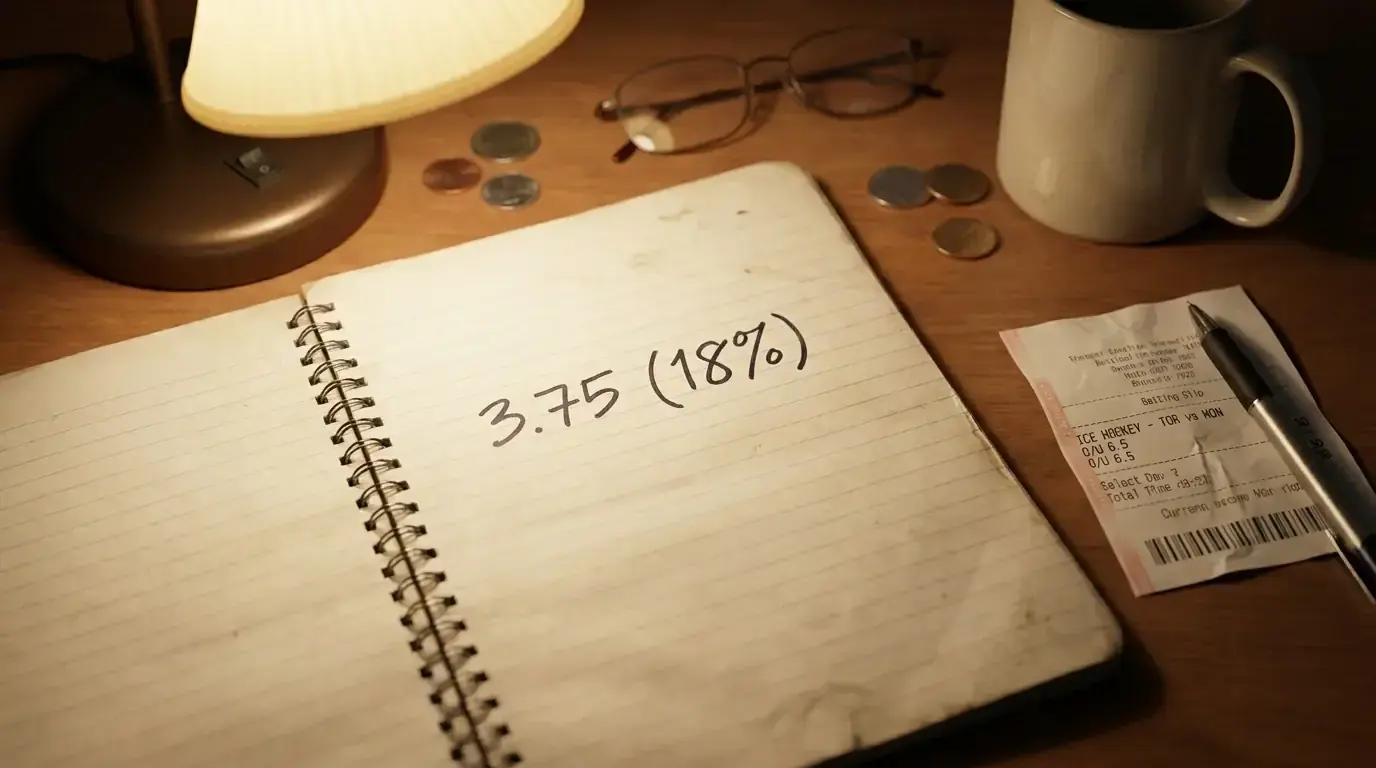
That percentage is the bookmaker’s stated opinion on how likely the outcome is, baked into the price. The reason this matters is that you can now hold the market’s number up against your own read of the game and see whether you disagree enough to bet. If you think a goalie matchup makes an EIHL home side closer to seventy-five percent to win but the price implies sixty-seven, you have found something. If you think they are fifty-fifty and the price implies sixty-seven, walk away.

I want to slow down on that subtraction, because it is the entire game in miniature. Betting is not about predicting winners; plenty of people predict winners and still lose money over a season. It is about predicting winners more accurately than the price assumes. The implied probability is the bar you have to clear, and conversion is how you read the height of that bar before you decide to jump. A 1.50 favourite needs to win two times in three just to break even at that price. If your honest read says they win three times in five, the price is wrong in the bookmaker’s favour and you leave it alone, however much you fancy the team.
There is a catch baked into the maths, and it is the bookmaker’s whole business model. Add up the implied probabilities for every outcome in a market and they total more than one hundred percent. That surplus is the margin, sometimes called the overround, and it is the reason online gross gambling yield grew by 13.1% to reach 7.8 billion pounds across the UK market. The percentages overshoot because the price is shaded in the bookmaker’s favour. Knowing how to extract implied probability is the only way to see that shading for what it is, which is why I treat conversion as a survival skill rather than a party trick. If you want to go deeper on how that margin is built into a hockey market, I unpack it properly over in my full breakdown of fractional and decimal pricing.
Why I still keep both formats in my head
You might reasonably ask why anyone bothers with fractions at all once decimal is this clean. The honest answer is that the British betting world runs on both, and pretending otherwise leaves you reading half the prices on a screen. Traditional UK bookmakers still default to fractional on a lot of markets, accumulators and outrights especially, while the comparison sites and the newer operators lean decimal. The Gambling Survey for Great Britain found that 47% of people had gambled in the past four weeks, and that crowd is staring at both formats every day without always knowing how to line them up.

My working habit is to read whatever the screen gives me, convert silently to decimal in my head, and make every decision in that one consistent currency. Fractional for the texture, decimal for the maths. The plus-one formula is the hinge the whole thing turns on, and once it is automatic you stop noticing you are doing it at all.
